






















What is the project
This project develops dynamic load balancing algorithms for smart charging and software to centrally manage a network of Electric Vehicle (EV) chargers in the retail sector. It is for retailers and charger owners/operators who need to integrate EV charging into stores and autonomous retail Pods, especially where increasing available power or installing transformer stations is not possible. It aims to reduce inefficiencies in managing multiple charging points and improve the EV charging experience in retail spaces.
Project at a glance
Focus: Integrated management of a retail EV charging network, including dynamic load balancing and integration into stores/Pods
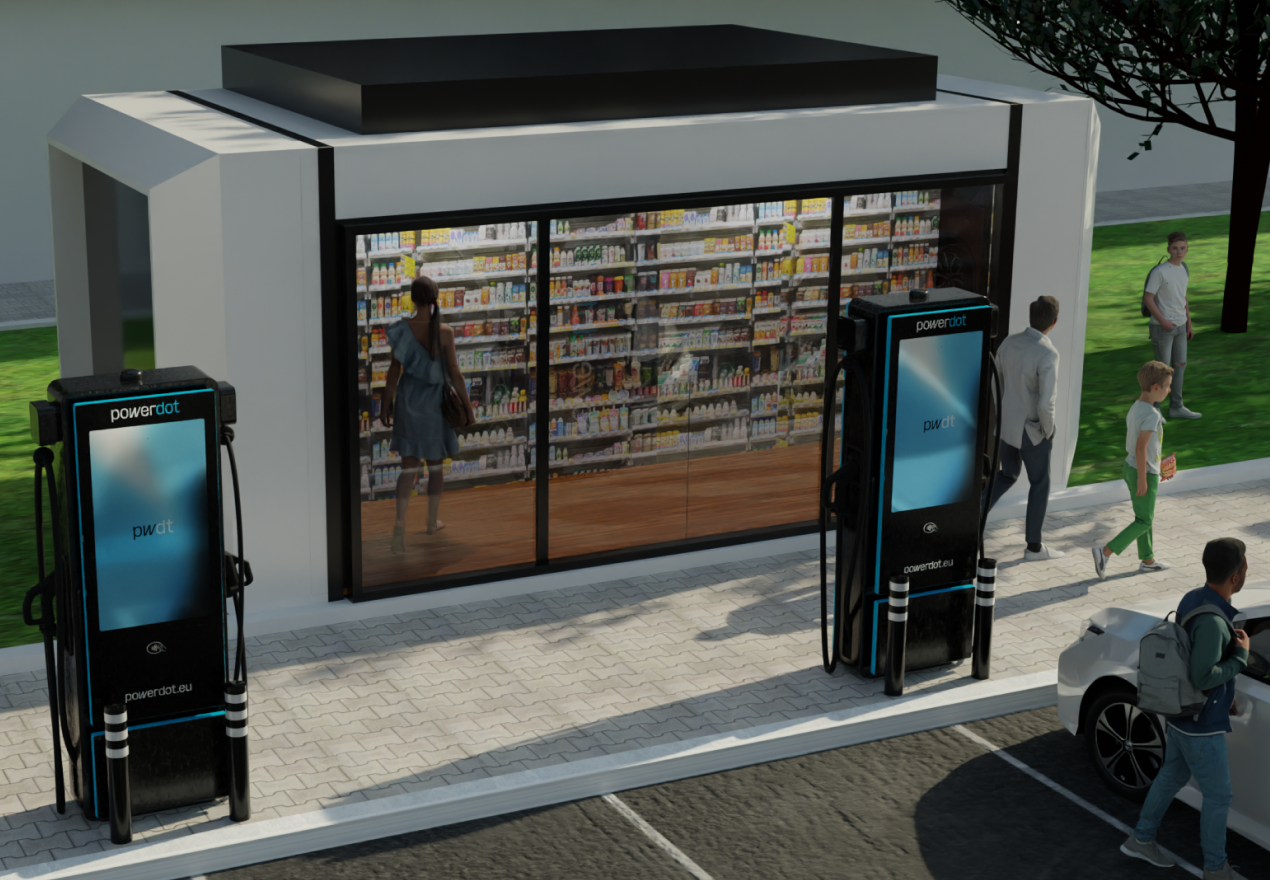
Key demonstrators: Payment terminals at chargers; QR code experience for real-time session tracking; white-label web app for retailers; in-store discount mechanism; autonomous retail concept integrated with charging stations
Operation: Powerdot (leader) with multi-supplier OEM (Original Equipment Manufacturer) compatibility via protocols and APIs; cloud-to-cloud communication with EMSP (Electricity Mobility Service Provider)
Objectives
- Develop dynamic load balancing algorithms for smart charging to manage available power across charging points in real time
- Build software for integrated management of a retail-sector EV charger network (centralized monitoring and control)
- Create protocols and application programming interfaces (APIs) compatible with multiple charger suppliers (OEMs)
- Implement control mechanisms for maintenance and user support
- Enable new payment methods and billing flows (including card payment and pre-authorization at terminals)
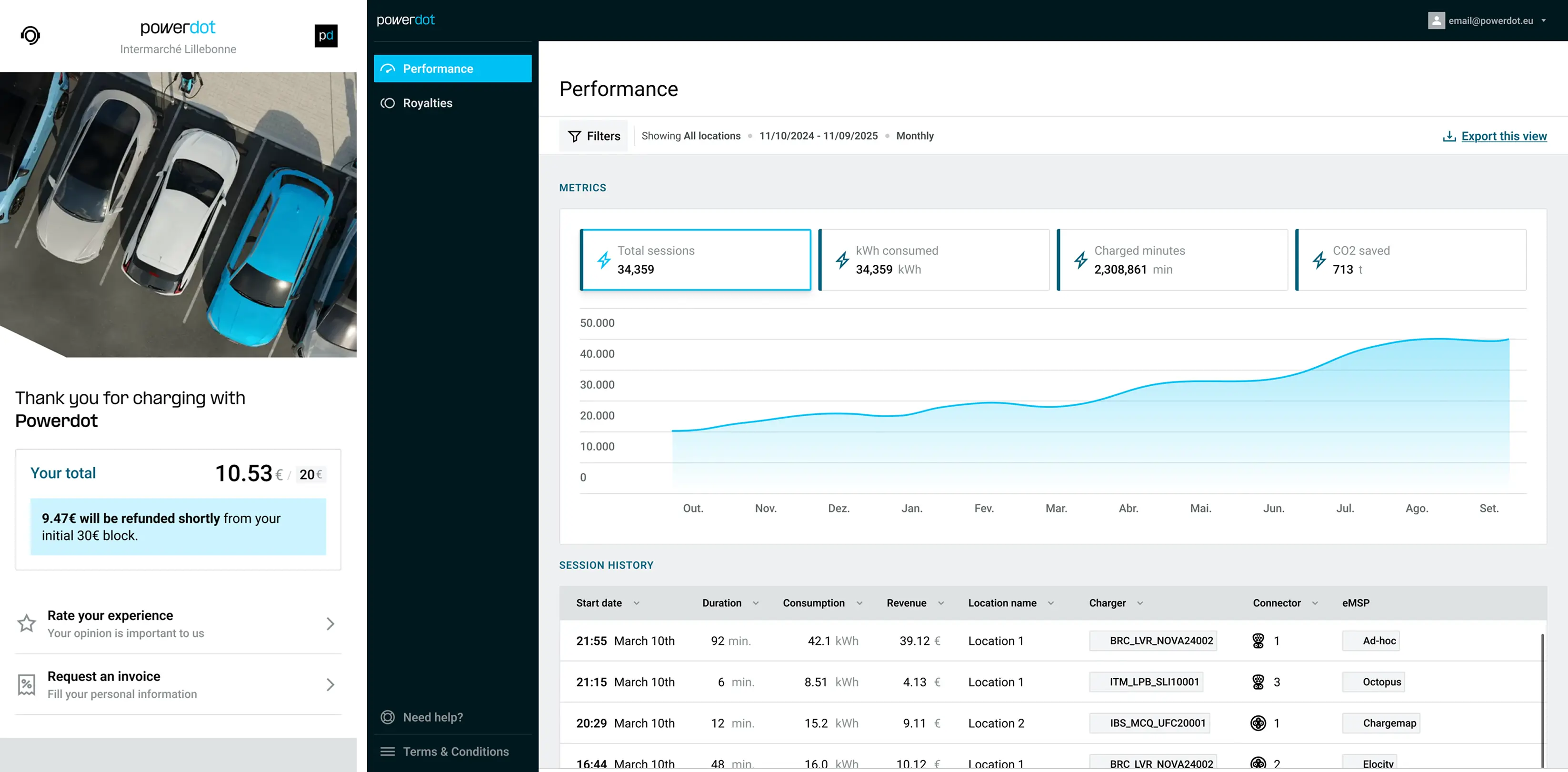
- Improve retailer and customer experience with data visualization for retailers and customer-facing app features (e.g., charging control, loyalty/discount mechanisms)
What we delivered
We defined and advanced the integration of payment terminals into EV chargers, enabling users to see pricing and pre-authorize charging sessions with a credit or debit card, without needing to be registered with an electric mobility energy retailer. We also implemented a QR code-based flow so users can track, in real time, the energy delivered and the cost of the charging session. In parallel, we developed a cloud-to-cloud communication solution that allows direct interaction between the payment terminal hardware and the EMSP. We defined requirements and the solution architecture for an autonomous retail concept integrated with Powerdot charging stations, including 3D design and a space-efficient layout concept. We also made progress on a customizable white-label web app for retail partners: scanning a QR code routes users to a partner-branded interface (colors, logo, style) with core charging features such as payment, real-time session monitoring, and customer support, supported by front-end configuration and back-end implementation. Finally, we developed an in-store discount feature where users, after starting a charging session, can access a digital barcode convertible into discounts in partner stores, supported by promotional front-end components (e.g., banners and pop-ups) and back-end integrations to activate and manage promo codes based on participating locations and partner-defined parameters.
What we are delivering
Dynamic load balancing algorithms and an internal system to manage available power across charging points in real time are ongoing, aiming to support simultaneous charging while avoiding overload and using higher charging levels when installed capacity allows. Work is also ongoing on “smart retail in a smart charging location”
What we will deliver
- Additional retailer-to-customer app features (e.g., customer controls charging).
- Alternative value propositions such as dynamic pricing structures.
- Further integration between internal retail systems and charging systems .
Metrics / KPIs
% Female workers
Value: 14,71%
Product categories developed
Value: 6
Notes: Categories listed: (1) Payment terminal integration, (2) Charging Point Management System (CPMS), (3) Data visualization platform for retailers, (4) White-label web app for charger control, (5) Dynamic load balancing algorithms (ongoing), (6) Smart retail at a smart charging location (ongoing).
Summary
This project develops the software and control layer to integrate EV charging into retail spaces, including stores and autonomous Pods. It combines centralized network management with dynamic load balancing to support installations where power upgrades or transformer stations are not feasible. Recent work includes payment-terminal integration (card payment and pre-authorization), a QR code flow for real-time cost and energy tracking, a customizable white-label web app for retail partners, and an in-store discount mechanism that connects charging sessions with retail purchases.

.webp)



