






















What is the project
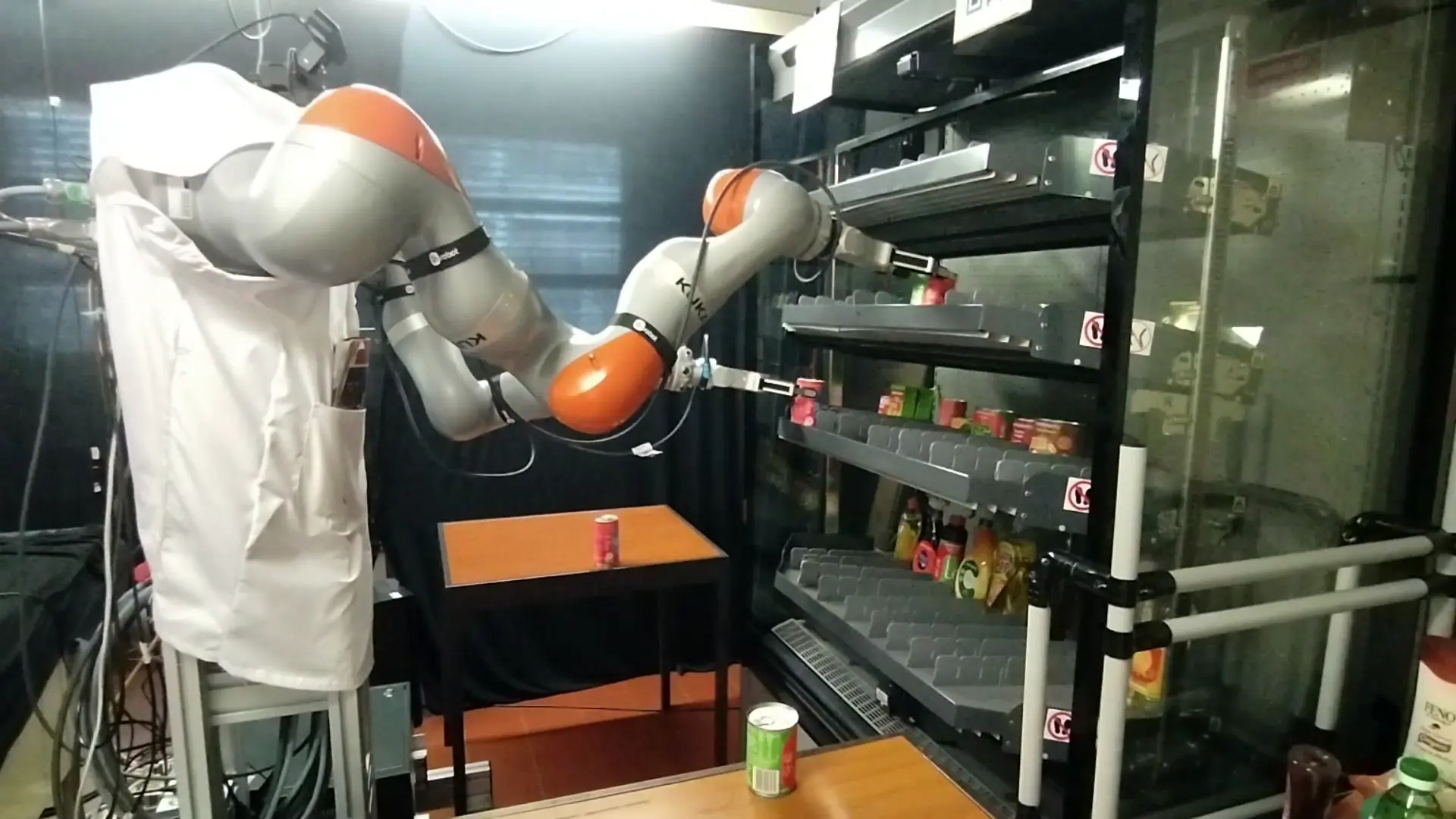
This project aims to investigate the feasibility of using anthropomorphic robots with bimanual manipulation to perform restocking operations in vertical ambient shelving units. Restocking operations are carried out on shelving units with inclined shelves that rotate to allow rear loading, ensuring that the product at the front is the one that has been on display the longest. This type of shelving also keeps the front continuously faced and fully stocked, while promoting better product organization.
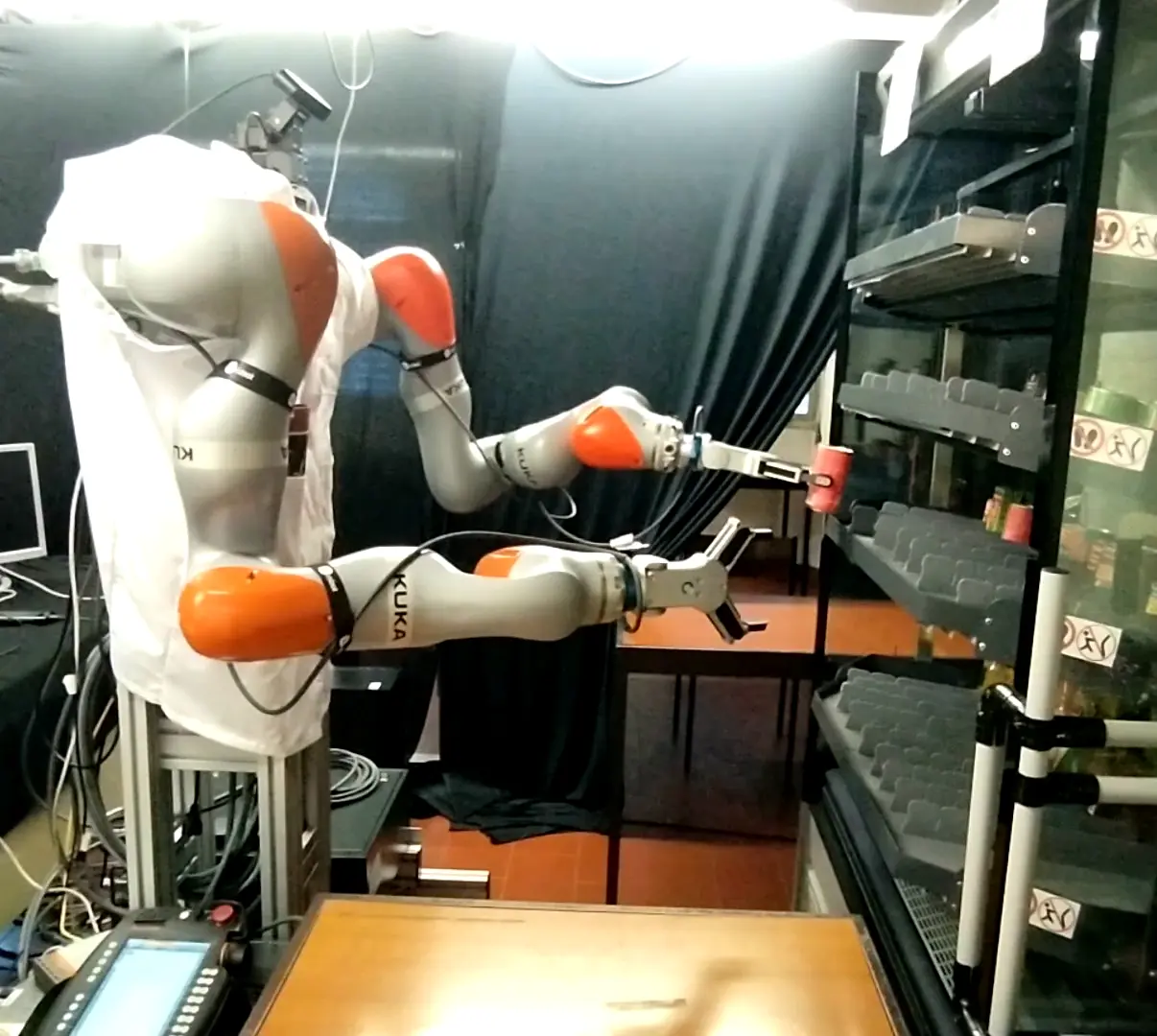
The anthropomorphic robot is equipped with two arms, enabling simultaneous product placement, extended operational reach, and the handling of items that require bimanual manipulation.
The structure also integrates a vision system that enables product range recognition and pose estimation for accurate positioning.
The arm’s motion planning uses a human-like planner to generate movements similar to those of humans, facilitating human operators' interpretation of the robot’s intentions when robots and staff share restocking tasks.
Project at a glance
Focus: Bimanual anthropomorphic robot for product restocking in vertical ambient shelving units.
Key demonstrators: Laboratory demonstration of the anthropomorphic robot performing restocking operations.
Primary pilot locations: Laboratory prototype developed at the University of Minho
Objectives
- Product restocking by anthropomorphic robots reduces physical effort and mitigates ergonomic risks for staff during replenishment tasks in vertical ambient shelving units.
- Ensure that the cabinet fronts are continuously stocked with products.
- Restocking through automated systems aims to increase operational efficiency, both by being faster and by avoiding disruptions caused by staff absenteeism.
What we are delivering
The goal is to deliver a laboratory prototype of a bimanual anthropomorphic system capable of restocking shelving units with inclined shelves, placing two products simultaneously, transferring items between hands to extend its reach, and handling products that require two-handed manipulation. The system also features a vision system that can recognize products and determine their precise locations.
Metrics / KPIs
Operational efficiency
Value: Increase
Notes: The robotic system, using both arms simultaneously, increases task efficiency and is always available, unlike human operators who may occasionally be absent.
Ergonomic risk level
Value: Eliminated
Notes: Manual staff is no longer required to perform cabinet restocking operations.
Summary
This project develops a laboratory prototype of a bimanual anthropomorphic robot for automated product restocking in vertical shelving units. The system combines dual-arm manipulation, vision-based product recognition, and human-like motion planning to ensure accurate placement and continuous front-facing stock. By automating replenishment tasks, it aims to increase operational efficiency while eliminating ergonomic strain associated with manual restocking.

.webp)



