














About the project
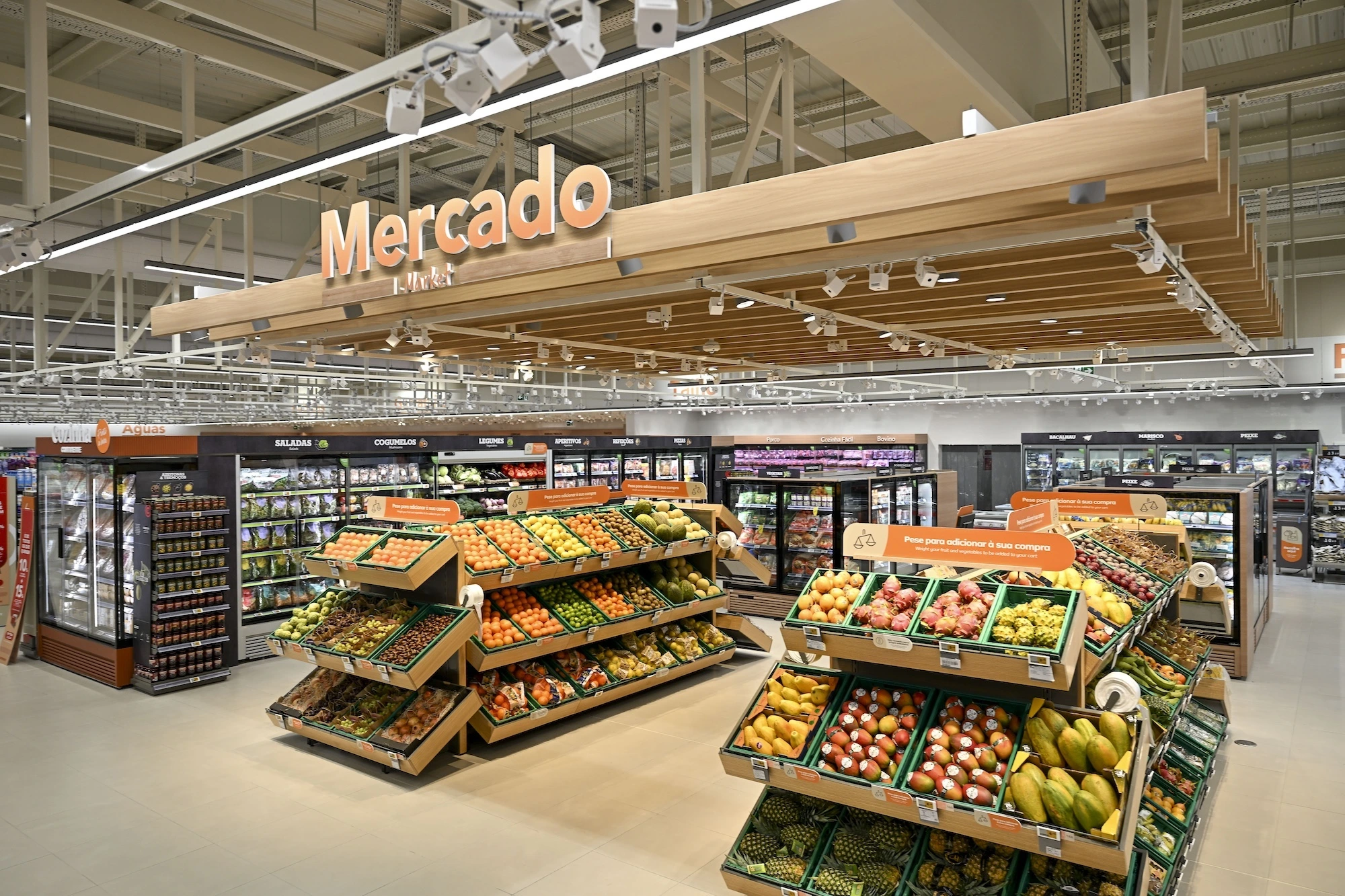
The Autonomous Store is an autonomous or hybrid retail format for grocery retailers, built on sensor fusion — computer vision and weight sensors — and AI. It enables customers to shop without queues by automatically building a virtual basket, with checkout either at an exit terminal or later via an app.
Project at a glance
Focus: Autonomous/hybrid store format using sensor fusion (computer vision + weight sensors) and AI to remove checkout queues
Key demonstrators: Continente Bom Dia autonomous pilot store (Leiria); real-time basket; large-scale camera and store calibration; large-scale people tracking; White Label App; StoreCraft digital twins; smart shelves and pallet scales; factory configuration tools; in-store hardware diagnostics; mobile installation tool; ERP (Enterprise Resource Planning) integration; annotation and neural network training pipeline automation
Operation: Customers enter, pick items, and either pay at an exit terminal or leave without interacting with a terminal and are charged later in an app; integration with FAST platform and retailer ERP
Primary pilot locations: Continente Bom Dia (Leiria); Continente Labs
Objectives
- Deliver a seamless autonomous shopping experience that removes checkout queues.
- Create and maintain an accurate real-time virtual basket using sensor fusion and AI.
- Scale calibration and tracking to large stores with high camera counts and high customer volumes.
- Improve store operations through tooling for planning, deployment, diagnostics, and product onboarding.
- Validate designs suitable for pilot-scale production with low variability and stable signal quality.
- Support retailer deployment through integrations (FAST platform and retailer ERP).
What we delivered
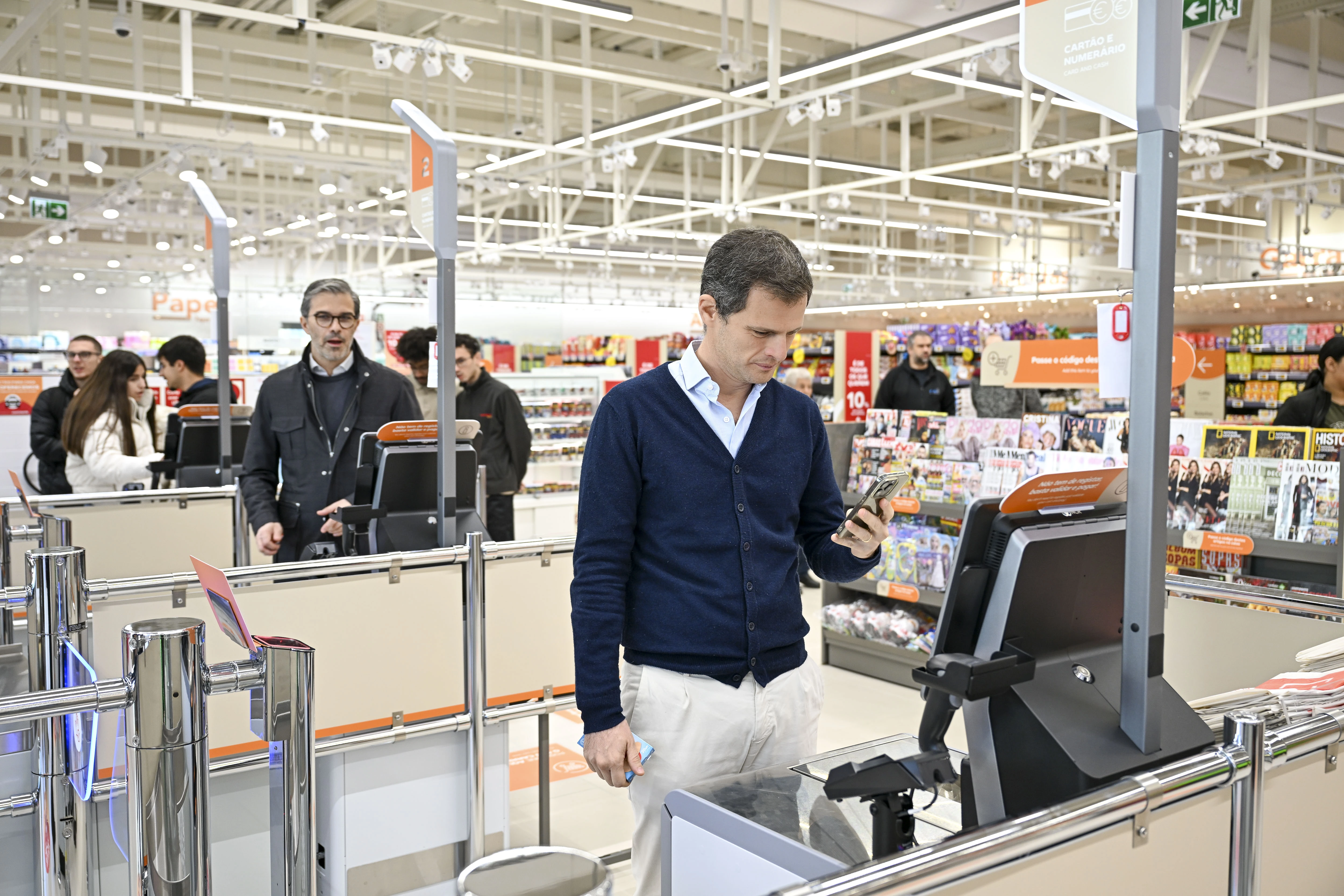
- Development and inauguration of the Continente Bom Dia autonomous pilot store in Leiria (1,217 m²) using computer vision, smart shelves and AI — enabling autonomous shopping without requiring app installation
- Extensive interaction testing and improvements to virtual basket accuracy through optimised product and scale layout, weight-signal oscillation filtering, and real-time planogram-change alerts
- Integration with the FAST app/platform and retailer ERP systems
- Large-scale camera calibration refactoring for stores with 1,000+ cameras and 1,000+ m², plus people-tracking improvements with a reported ~4× reduction in processing time
- Customisable White Label App with multiple payment systems and user identification options
- StoreCraft — a digital twin generation and simulation tool built on Unreal Engine, with automatic camera placement from store layout
- Smart shelves, reinforced picots and adapted pallet scales produced and deployed for the Bom Dia format
- Factory tools to parallelise camera configuration and a desktop tool for scale production, achieving near 0% faulty scales
- In-store hardware diagnostics, a mobile installation tool for validating camera and shelf positioning, and camera/gondola calibration optimisations including multi-cube sample acquisition and area-based parallel calibration
- Filter implemented to eliminate false person detections from posters
- Automated data capture, anonymised annotation (CVAT), quality assurance, training and deployment pipelines for computer vision models using Airflow
Key metrics
- 1,217 m² pilot store — Continente Bom Dia, Leiria
- 1,000+ cameras with scale calibration
- 12,000+ product references supported
- 2,500+ smart shelves produced
- 4 new products developed
Summary
The Autonomous Store project delivers an autonomous/hybrid retail format built on computer vision, weight sensing and artificial intelligence to remove checkout queues. The flagship deployment is the Continente Bom Dia pilot store in Leiria, supported by real-time basket technology, large-scale calibration and people tracking, and integrations with FAST and retailer ERP systems. Tooling for digital twins (StoreCraft), deployment, diagnostics, and automated model training helps scale operations across complex store environments.

.webp)



